



Histamine Receptor
Histamine Receptors are a class of G protein-coupled receptors with histamine as their endogenous ligand. There are four known histamine receptors: H1 receptor, H2 receptor, H3 receptor, H4 receptor. The H1 receptor is a histamine receptor belonging to the family of Rhodopsin-like G-protein-coupled receptors. This receptor, which is activated by the biogenic amine histamine, is expressed throughout the body, to be specific, in smooth muscles, on vascular endothelial cells, in the heart, and in the central nervous system. H2 receptors are positively coupled to adenylate cyclase via Gs. It is a potent stimulant of cAMP production, which leads to activation of Protein Kinase A. Histamine H3 receptors are expressed in the central nervous system and to a lesser extent the peripheral nervous system, where they act asautoreceptors in presynaptic histaminergic neurons, and also control histamine turnover by feedback inhibition of histamine synthesis and release. The Histamine H4 receptor has been shown to be involved in mediating eosinophil shape change and mast cell chemotaxis.
Histamine Receptor Isoform Specific Products
All Product Categories
-
Histamine Receptor Inhibitors
(199)
View all products
-
Histamine Receptor Agonists
(66)
View all products
-
Histamine Receptor Antagonists
(497)
View all products
-
Histamine Receptor Activators
(5)
View all products
-
Histamine Receptor Modulators
(20)
View all products
-
Histamine Receptor Controls
(9)
View all products
-
Histamine Receptor Ligands
(5)
View all products
-
Histamine Receptor Related Products (880)
Related Products (880)

-
Antibodies (2)
-
Histamine Receptor Isoform Comparison
-
Histamine H4 receptor antagonist-2
 0 ImagesCat. No.: HY-115833CAS No.: 379247-14-0Histamine H4 receptor antagonist-2 serves as a potent activator of p53, demonstrating significant antitumor efficacy.
-
AVN-101
 0 ImagesCat. No.: HY-117046CAS No.: 1025725-91-0AVN-101 is a potent, brain-penetrant and orally active 5-HT7 receptor antagonist (Ki of 153 pM), with slightly lesser potency toward 5-HT6, 5-HT2A, and 5HT-2C receptors (Ki values of 2.04 nM, 1.56 nM, and 1.17 nM, respectively). AVN-101 also exhibits a rather high affinity toward histamine H1 (Ki of 0.58 nM) and adrenergic α2A, α2B, and α2C (Ki= 0.41-3.6 nM) receptors. AVN-101 can be studied in such diseases as general anxiety disorders, depression, schizophrenia, Alzheimer’s disease, and multiple sclerosis.
-
Isothipendyl hydrochloride (Standard)
 0 ImagesCat. No.: HY-A0178ARCAS No.: 1225-60-1Synonyms: NSC 169186 (Standard)Isothipendyl (hydrochloride) (Standard) is the analytical standard of Isothipendyl (hydrochloride). This product is intended for research and analytical applications. Isothipendyl hydrochloride (), an azaphenothiazine derivative, is a potent histamine 1 (H1) receptor antagonist.othipendyl is a primary metabolite.
-
Tiopropamine
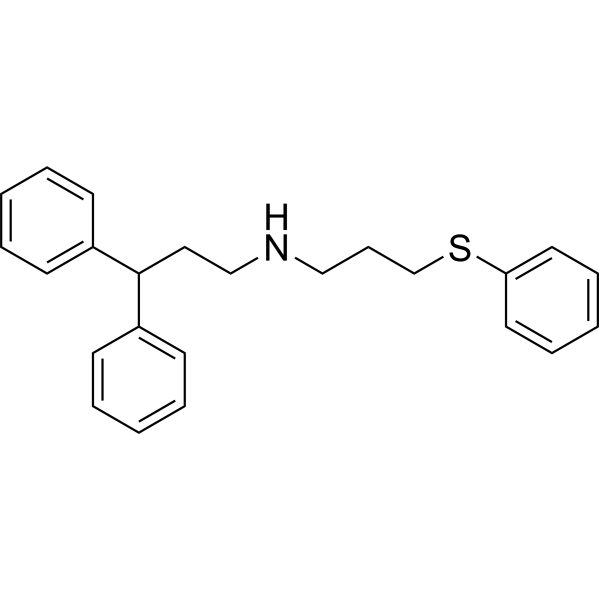 0 ImagesCat. No.: HY-156973CAS No.: 39516-21-7Tiopropamine is an anti-inflammatory agent, with potential effect on histamine receptor.
-
Cyproheptadine hydrochloride (Standard)
 0 ImagesSynonyms: Cyproheptadine HCl (Standard)Cyproheptadine hydrochloride (Standard) (Cyproheptadine HCl (Standard)) is the analytical standard of Cyproheptadine hydrochloride (HY-B0366A). This product is intended for research and analytical applications. Cyproheptadine hydrochloride (Cyproheptadine HCl) acts as a p38 MAP kinase activator, CHK2 activator, histamine H1 receptor inhibitor and serotonin receptor inhibitor. Cyproheptadine hydrochloride mediates cell cycle arrest via G1 phase arrest, G1/S transition arrest, G0/G1 phase arrest, reduced expression of cyclins D1/D2/D3, upregulated expression of HBP1, p16, p21, p27, and decreased phosphorylation of retinoblastoma protein. Cyproheptadine hydrochloride induces Apoptosis by increasing PARP and cleaved PARP, as well as activating the mitochondrial caspase pathway. Cyproheptadine hydrochloride inhibits tumor growth with extremely low toxicity to normal cells. Cyproheptadine hydrochloride can be used in research related to hepatocellular carcinoma, multiple myeloma and acute myeloid leukemia.
-
LY2624803
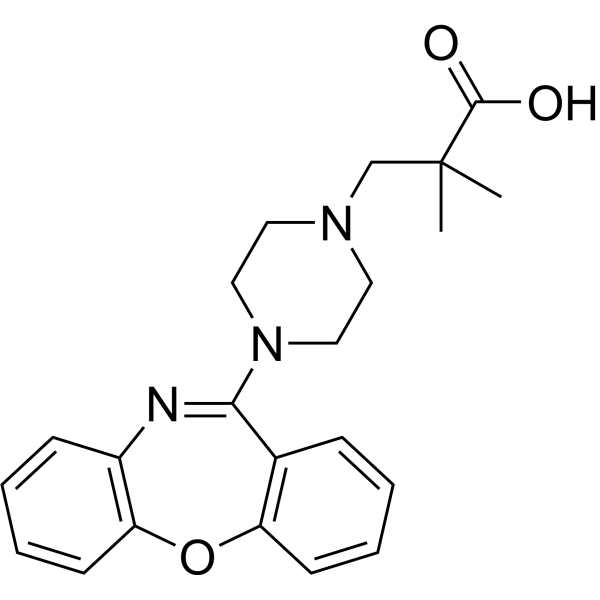 0 ImagesCat. No.: HY-123829CAS No.: 879409-35-5LY2624803 is a 5-HT2A and histamine, H1 receptor antagonist.
-
A-943931 hydrochloride
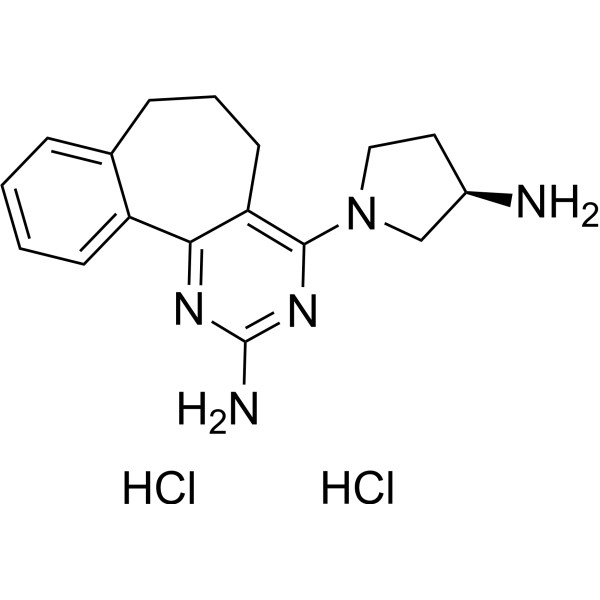 0 ImagesCat. No.: HY-107561CAS No.: 1227675-50-4A-943931 (Compound 10) is a histamine H4 receptor antagonists. A-943931 has improved pharmacotropic and in vivo efficacy in models of pain and inflammation. A-943931 can be used in vivo anti-inflammatory and anti-nociception research .
-
Gallocatechin-3-O-(3″-O-methyl)-gallate
 0 ImagesCat. No.: HY-171338CAS No.: 264147-80-0Synonyms: GCG3″MeGallocatechin-3-O-(3''-O-methyl)-gallate (GCG3''Me) is a catechin polyphenol. Gallocatechin-3-O-(3''-O-methyl)-gallate inhibits histamine release. Gallocatechin-3-O-(3''-O-methyl)-gallate can be used in allergy-related studies.
-
Promethazine-d3(hydrochloride)
 0 ImagesCat. No.: HY-B0781S1Promethazine-d3 (hydrochloride) is deuterium labeled Promethazine (hydrochloride). Promethazine hydrochloride is an orally active phenothiazine derivative with antihistaminic (H1), sedative, antiemetic, anticholinergic, and antimotion sickness properties. Promethazine hydrochloride is a potent H1 receptor antagonist and a mAChR antagonist. It also has a certain affinity for 5-HT2A and 5-HT2C receptors.
-
Irdabisant hydrochloride
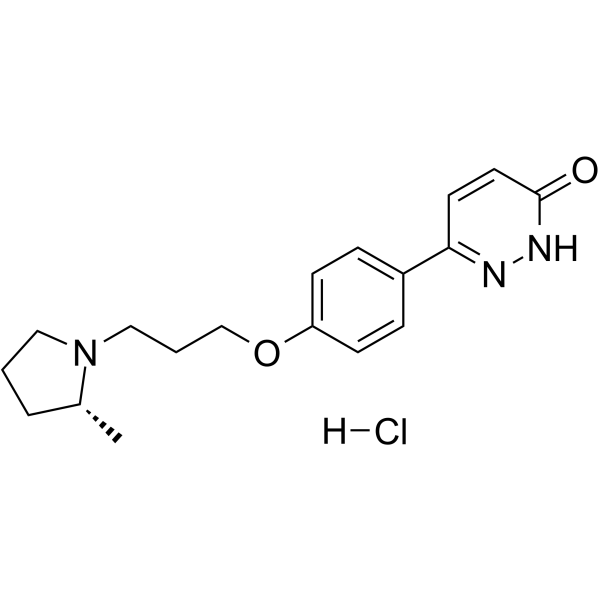 0 ImagesCat. No.: HY-109968ACAS No.: 1005398-61-7Synonyms: CEP-26401 hydrochlorideIrdabisant (CEP-26401) hydrochloride is a selective, orally active and blood-brain barrier (BBB) penetrant histamine H3 receptor (H3R) inverse agonist/inverse agonist with Ki values of 7.2 nM and 2.0 nM for rat H3R and human H3R, respectively. Irdabisant hydrochloride has relatively low inhibitory activity against hERG current with an IC50 of 13.8 μM. Irdabisant hydrochloride has cognition-enhancing and wake-promoting activities in the rat social recognition model. Irdabisant hydrochloride can be used to research schizophrenia or cognitive impairment.
-
Quifenadine hydrochloride
 0 ImagesCat. No.: HY-W492795CAS No.: 10447-38-8Quifenadine hydrochloride is an H1-histamine receptor blocker and can be used in the research of anti-arrhythmia.
-
Difeterol
 0 ImagesCat. No.: HY-118729CAS No.: 14587-50-9Difeterol is an antihistamine agent and histamine-1 receptor antagonist. Difeterol inhibits BChE. Difeterol can be used in the research of Alzheimer's disease.
-
Etofesalamide
 0 ImagesCat. No.: HY-W309310CAS No.: 64700-55-6Etofesalamide is a nonsteroidal antiinflammatory agent. Etofesalamide has major phase II metabolites of glucoside and riboside conjugations (such as etofesalamide-2-glucuronide) in filamentous fungi. Etofesalamide can be used for allergic and autoimmune skin diseases like toacne, psoriasis and sensitization dermatitis research.
-
Benztropine-13C,d3 mesylate
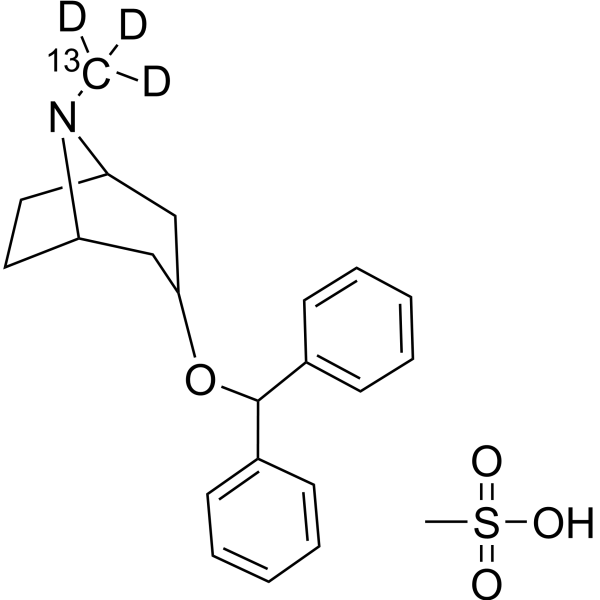 0 ImagesCat. No.: HY-B0520ASBenztropine-13C,d3 (mesylate) is the 13C- and deuterium labeled Benztropine (mesylate). Benztropine mesylate (Benzatropine mesylate) is an orally active centrally acting anticholinergic agent that can be used for Parkinson's disease research. Benztropine mesylate is an anti-histamine agent and a dopamine re-uptake inhibitor. Benztropine mesylate is also a human D2 dopamine receptor allosteric antagonist. Benztropine mesylate also has anti-CSCs (cancer stem cells) effects.
-
Hydroxyzine-d8 dihydrochloride
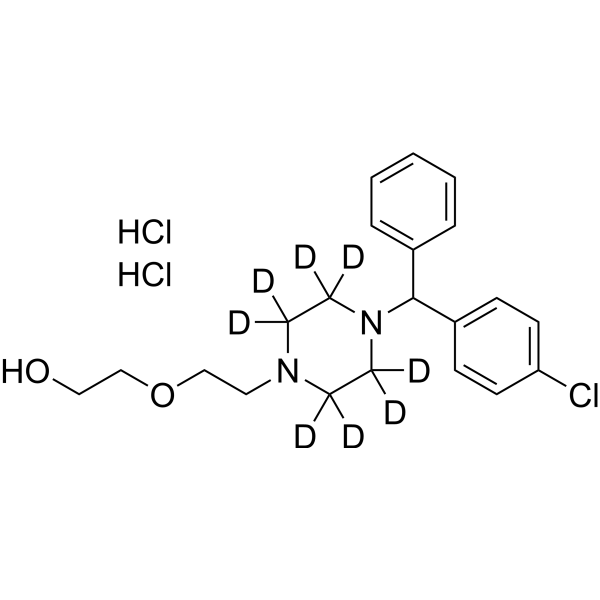 0 ImagesCat. No.: HY-B0548AS2CAS No.: 1808202-93-8Hydroxyzine-d8 (dihydrochloride) is the deuterium labeled Hydroxyzine dihydrochloride. Hydroxyzine dihydrochloride, a benzodiazepine antihistamine agent, acts as a orally active histamine?H1-receptor and serotonin antagonist. Hydroxyzine dihydrochloride has anxiolytic effect and can be used forthe research of generalised anxiety disorder.
-
Undecane-d24
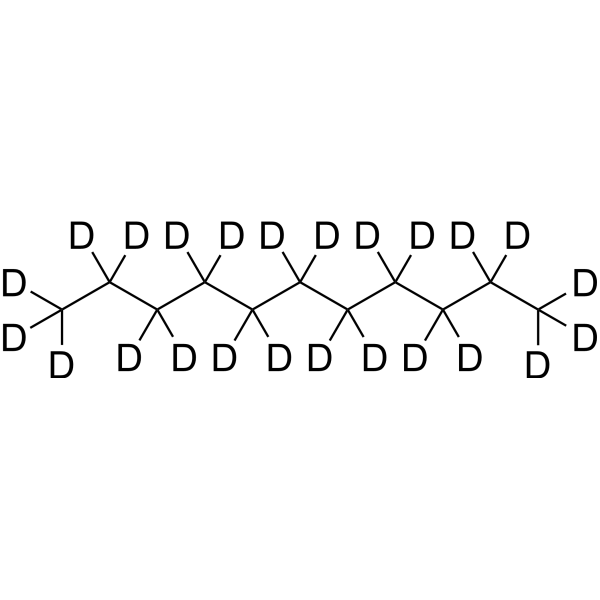 0 ImagesCat. No.: HY-N8593SCAS No.: 164858-54-2Undecane-d24 is the deuterium labeled Undecane (HY-N8593).Undecane is a potent cAMP agonist with anti-allergic and anti-inflammatory activities. Undecane inhibits degranulation and the secretion of histamine and TNF-α. Undecane reverses the increased levels of p38 phosphorylation, NF-κB transcriptional activity and target cytokine/chemokine genes, including thymus and activation-regulated chemokine (TARC), macrophage-derived chemokine (MDC) and interleukin-8 (IL-8). Undecane can be used for the study of skin inflammatory disorders, such as atopic dermatitis.
-
Aceprometazine
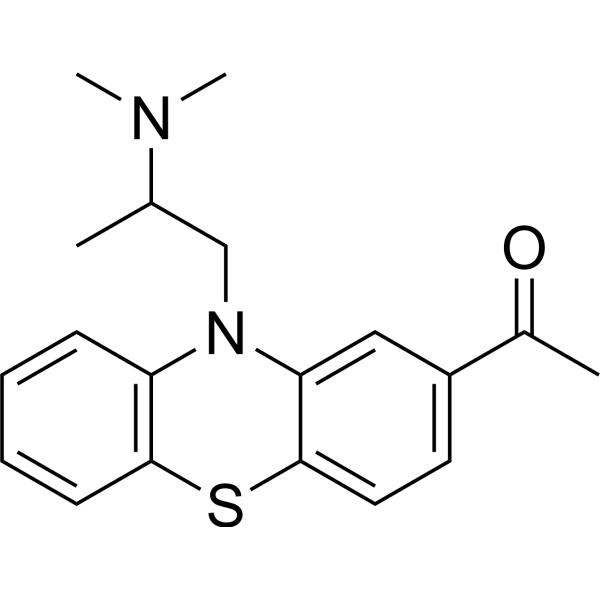 0 ImagesCat. No.: HY-A0243CAS No.: 13461-01-3Synonyms: 1664CB; AcepromethazineAceprometazine (1664CB) is an orally active antipsychotic. Aceprometazine can be used in the study of psychiatric disorders, such as depression.

-
Zaltidine dihydrochloride
 0 ImagesCat. No.: HY-15541ACAS No.: 90274-23-0Synonyms: CP-5736 dihydrochlorideZaltidine (CP-5736) dihydrochloride is a highly specific H2 receptor antagonist with antisecretion activity. Zaltidine dihydrochloride reduces the stimulant effect of histamine on gastric acid secretion by binding to histamine H2 receptors on gastric parietal cells, thus reducing gastric acid production. Zaltidine dihydrochloride can be used in the study of gastric acid-related diseases such as duodenal ulcers.




